

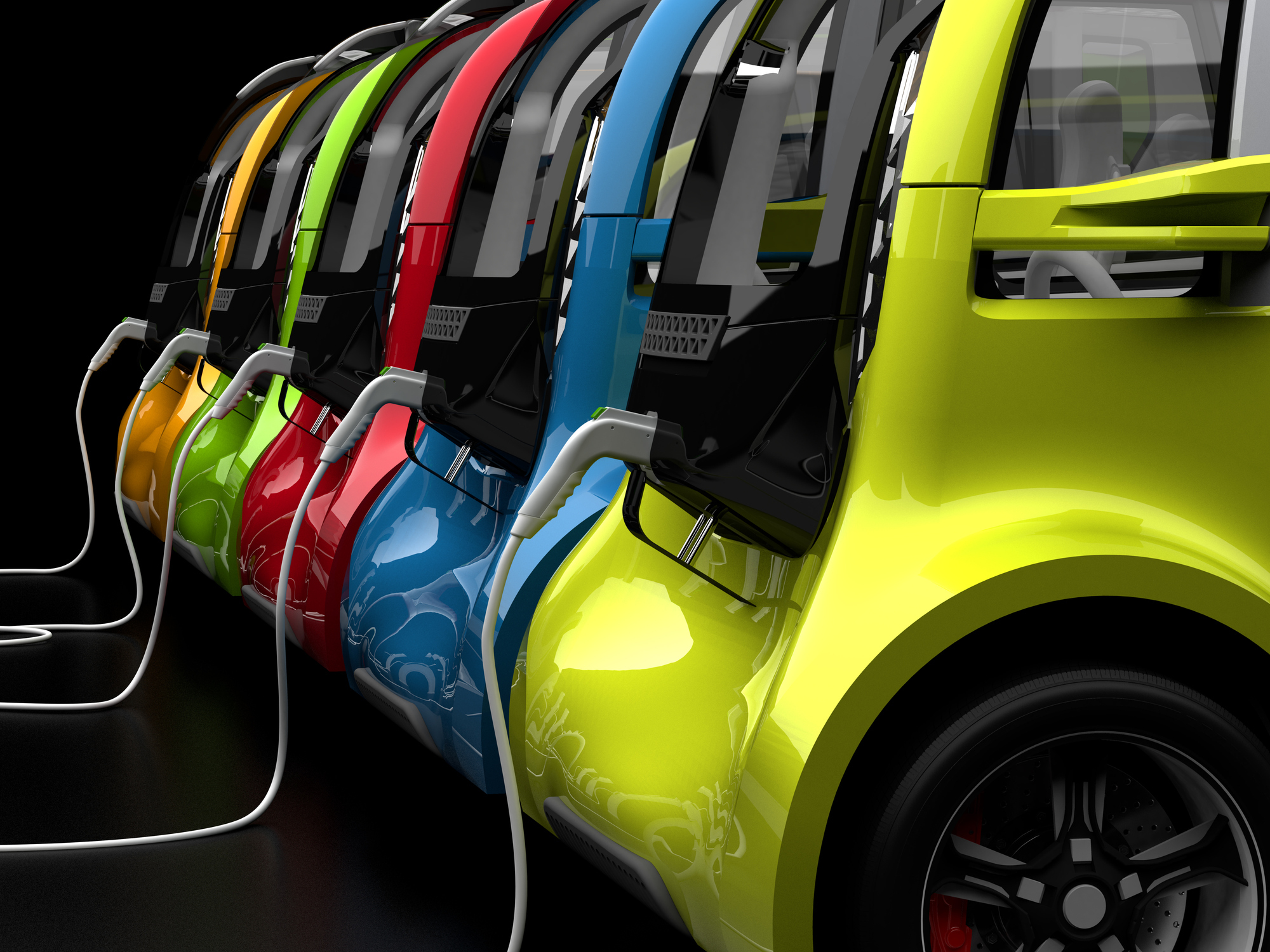
Australia’s motor vehicle market is changing rapidly, with electric vehicles and SUVs rising in popularity, while sedans and wagons continuing to fall out of favour with consumers. To capture these trends, we have updated our motor vehicle propensity data pack by applying advanced statistical techniques and machine learning to the 2025 Road Vehicles report provided by the Bureau of Infrastructure and Transport Research Economics (BITRE). This allows consumer trends to be visualised geographically at the fine-grained SA1 level, rather than the coarser postcode-level data available. Moreover, the data can then be combined with other sets of consumer and census data, giving a better sense of not just where different types of vehicles are being adopted, but by whom. To demonstrate this, we will take a quick look at a few of these emerging trends using the geoTribes Explorer platform.
The Rise of Electric Vehicles
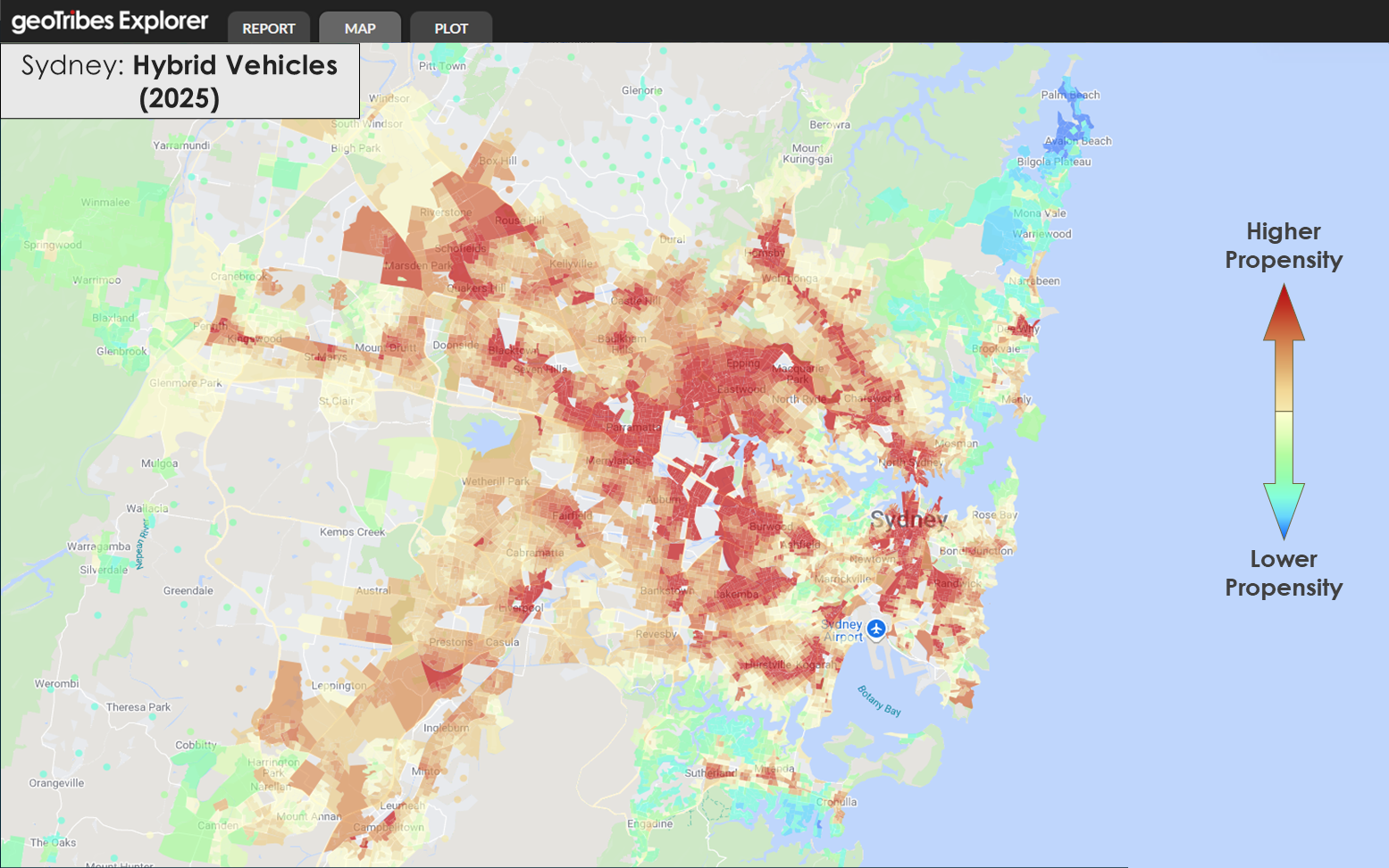
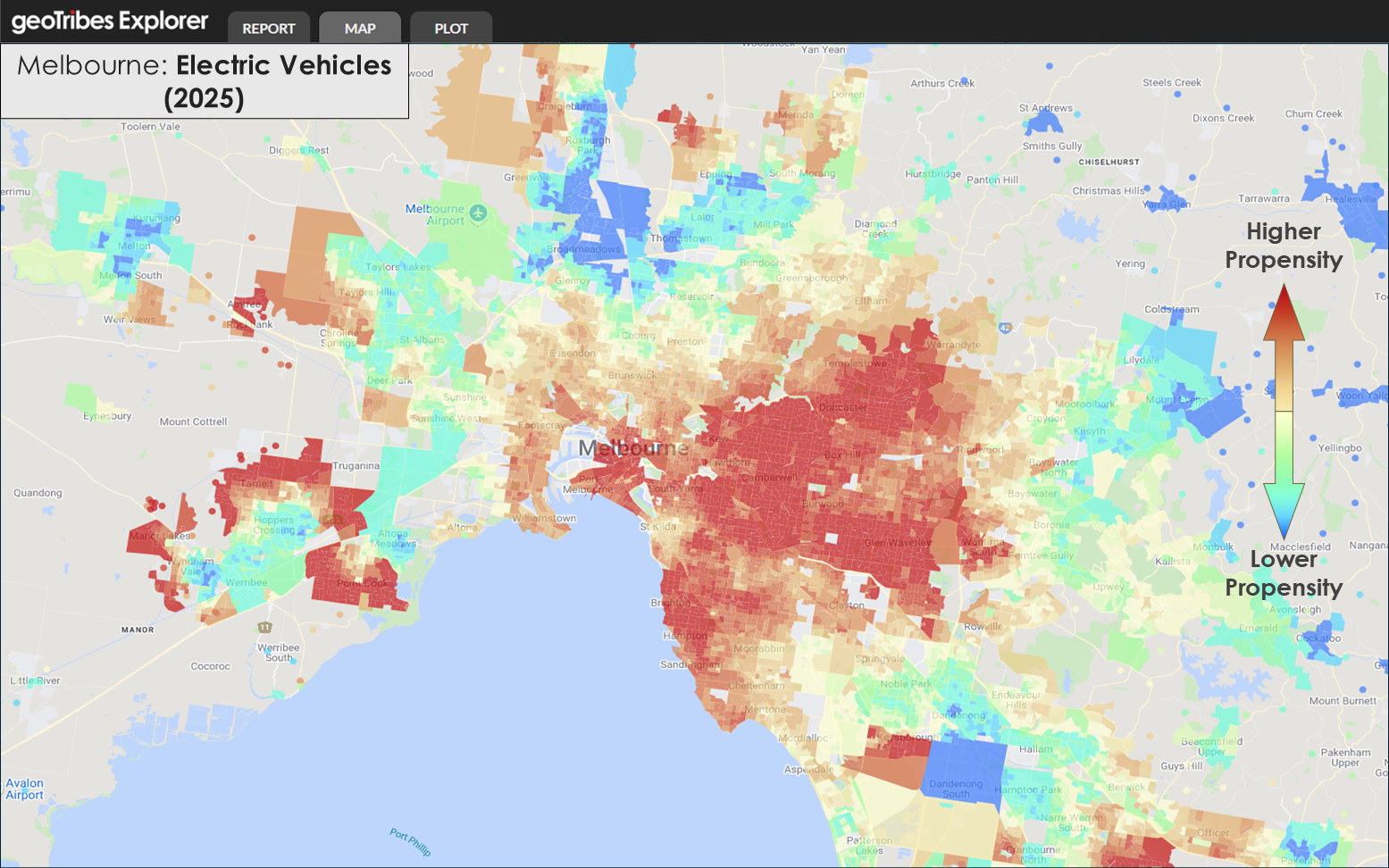
While national sales of new electric cars have more than quadrupled since 2022, the vehicles are not being adopted uniformly. Likely due to the higher cost of many EVs, and some overlap between the two categories, areas in cities with a high uptake of EVs also see high sales of luxury vehicles. As cheaper EVs enter the market and charging stations become more available , it remains to be seen if sales can increase outside of the higher socioeconomic areas and into areas in which hybrid vehicles are more popular. From 2022 to 2025, electric vehicles have drastically increased their market share in suburbs such as Marsden Park in Sydney and Tarneit in Melbourne. These areas have undergone significant dwelling and population growth, with many young families moving further out of the cities to these suburbs.
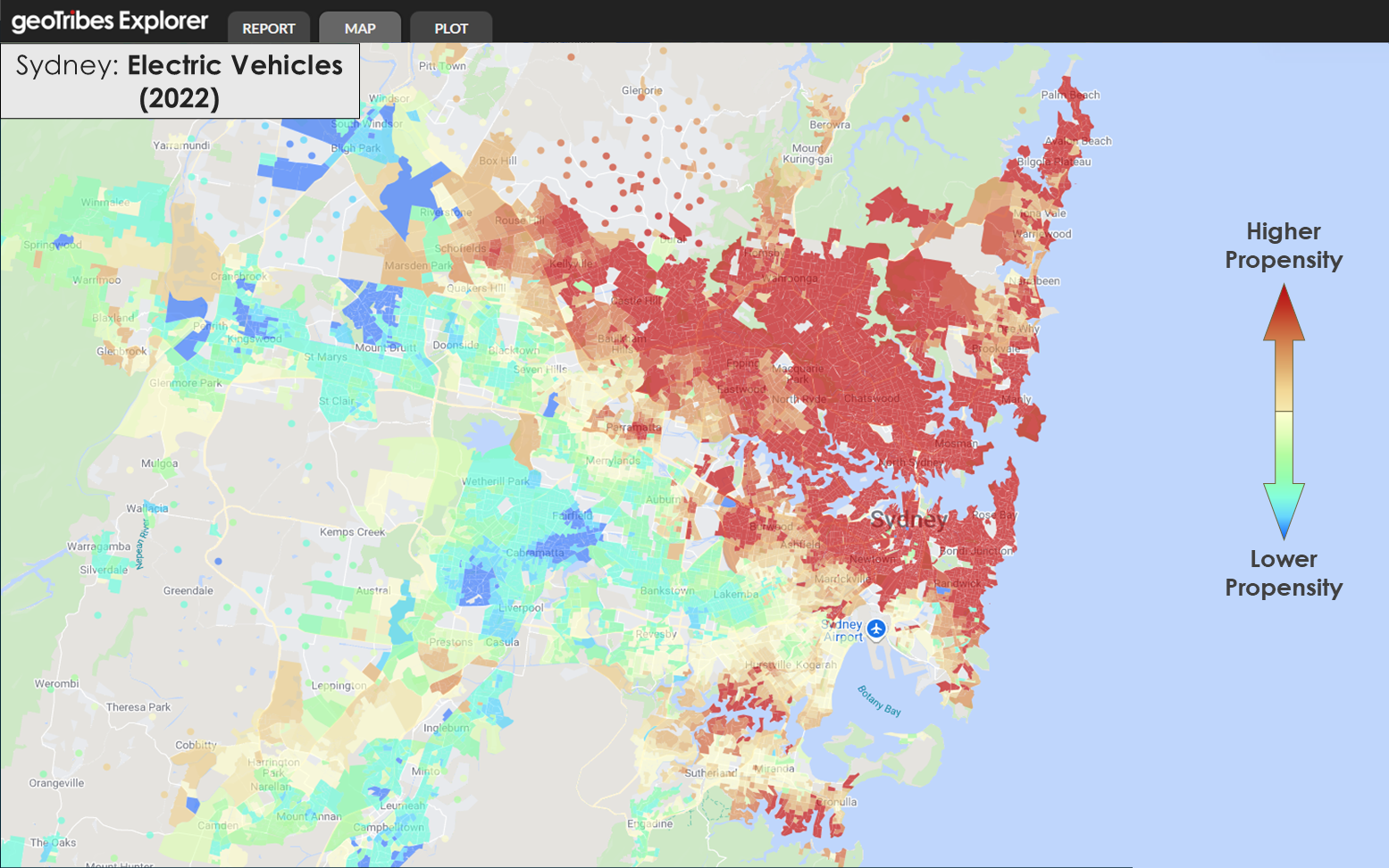 Estimated annual count of new electric vehicles purchased in 2019-2021, per 10,000 registered vehicles as of 2021. Legend compares area values to the national mean of 6.38 per 10,000 vehicles.




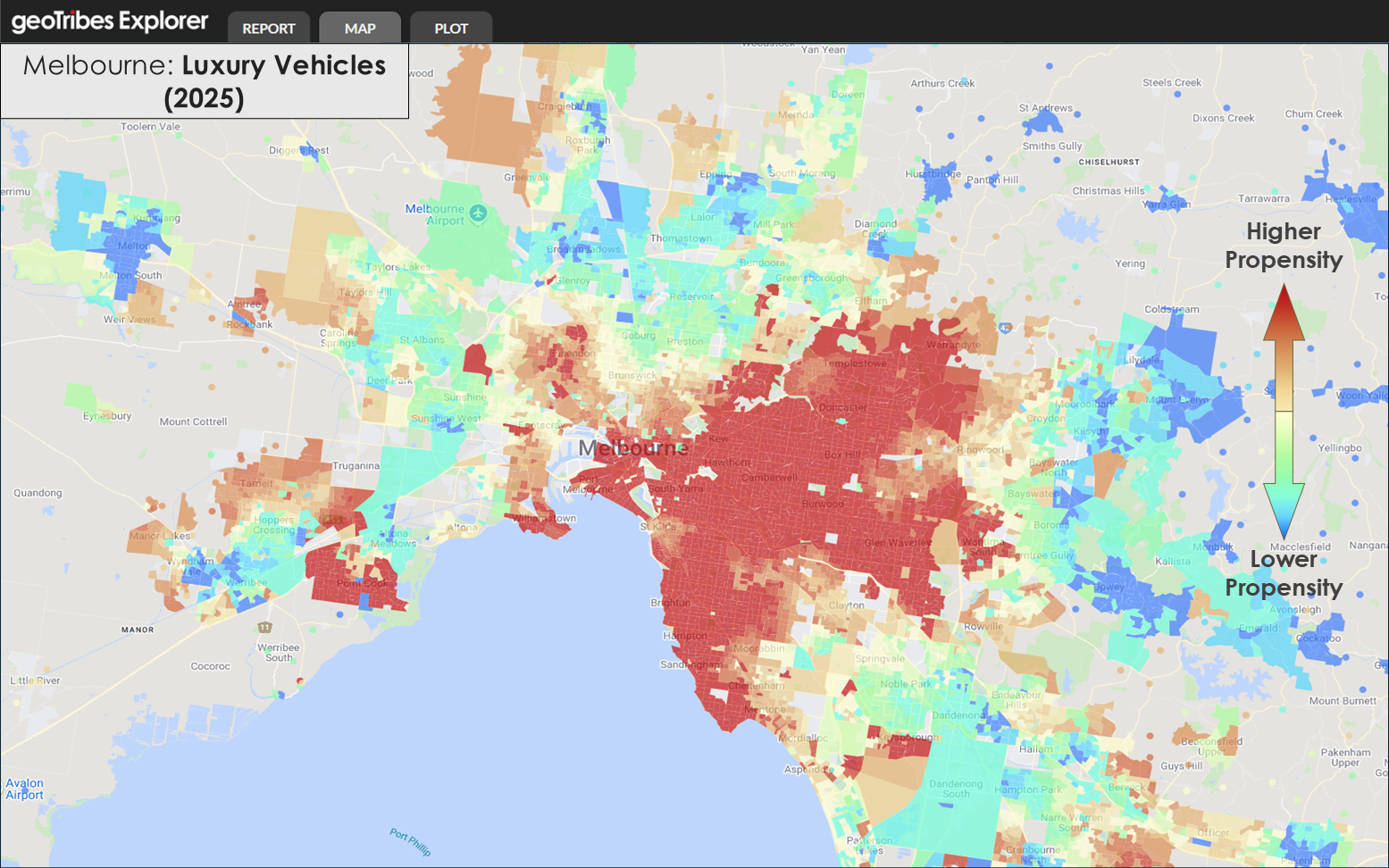
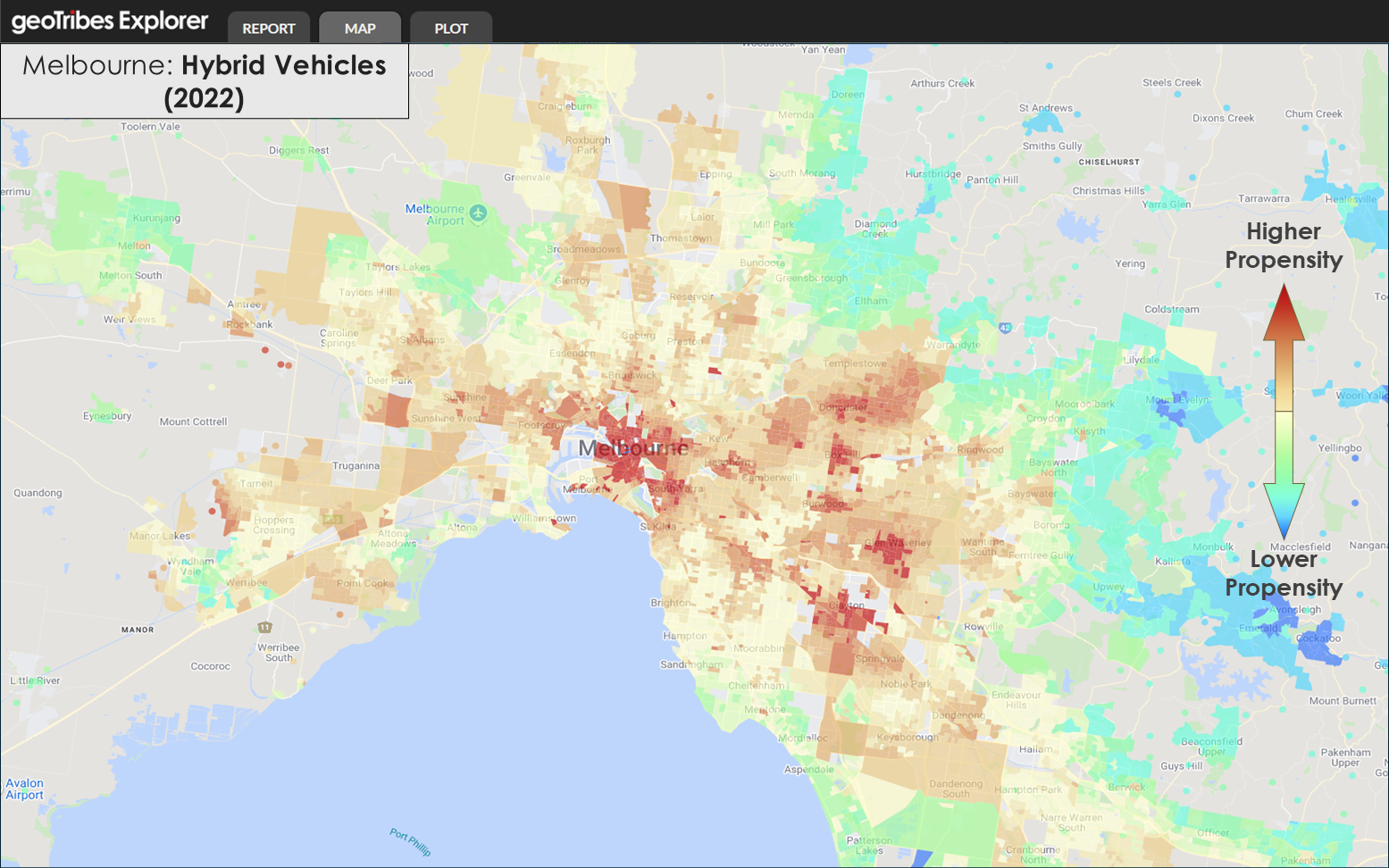
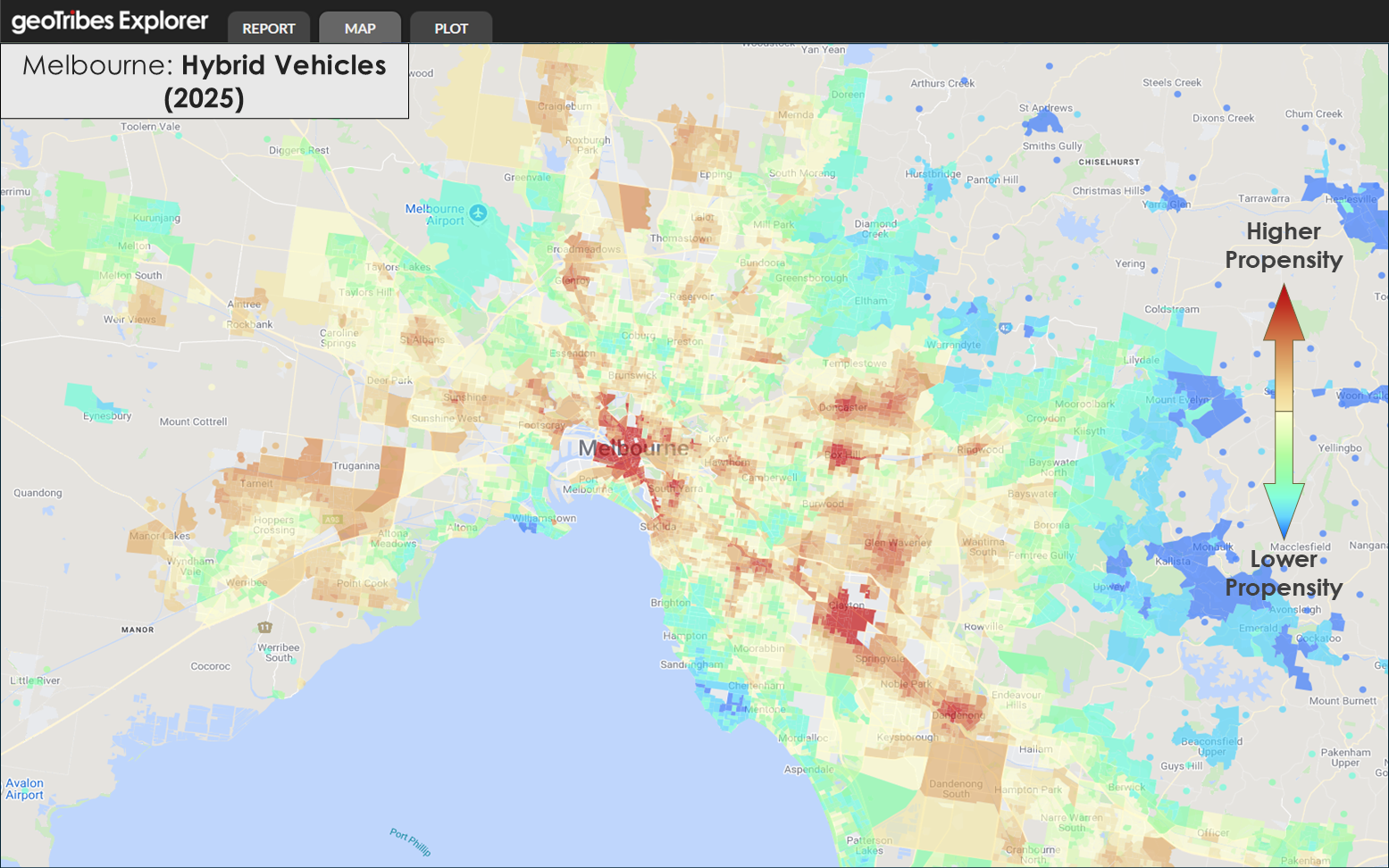
Chinese Brands Transform the Market
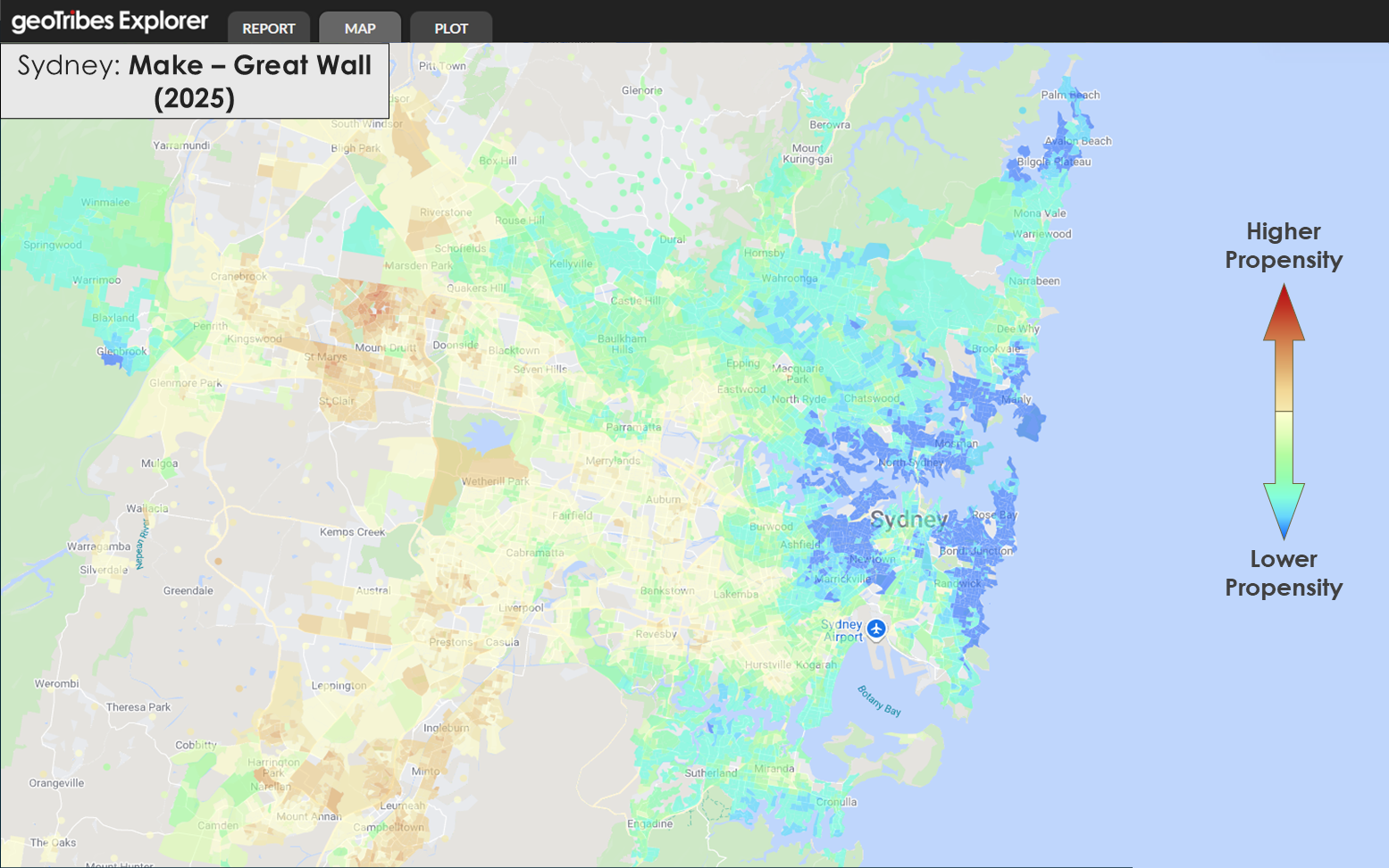
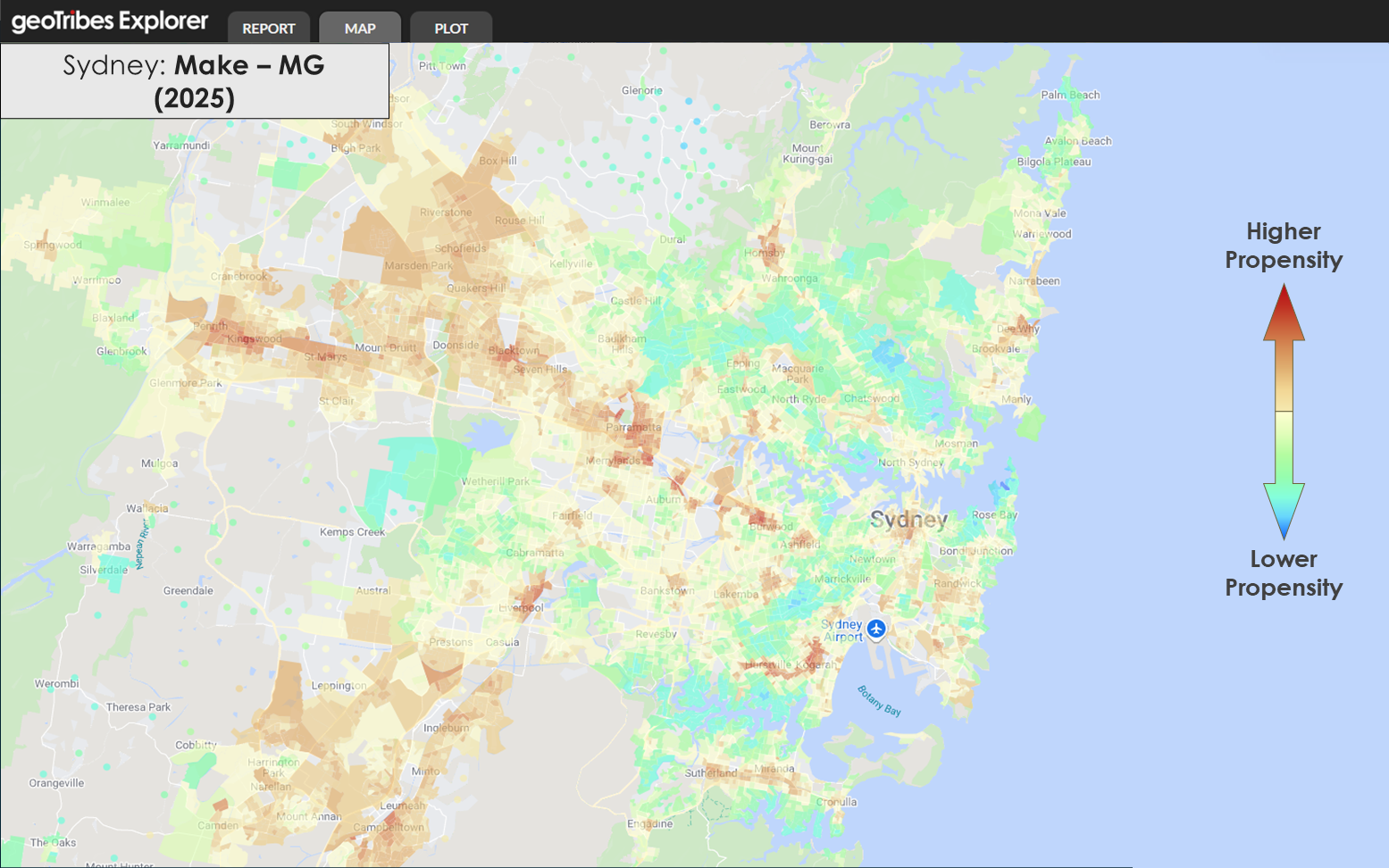
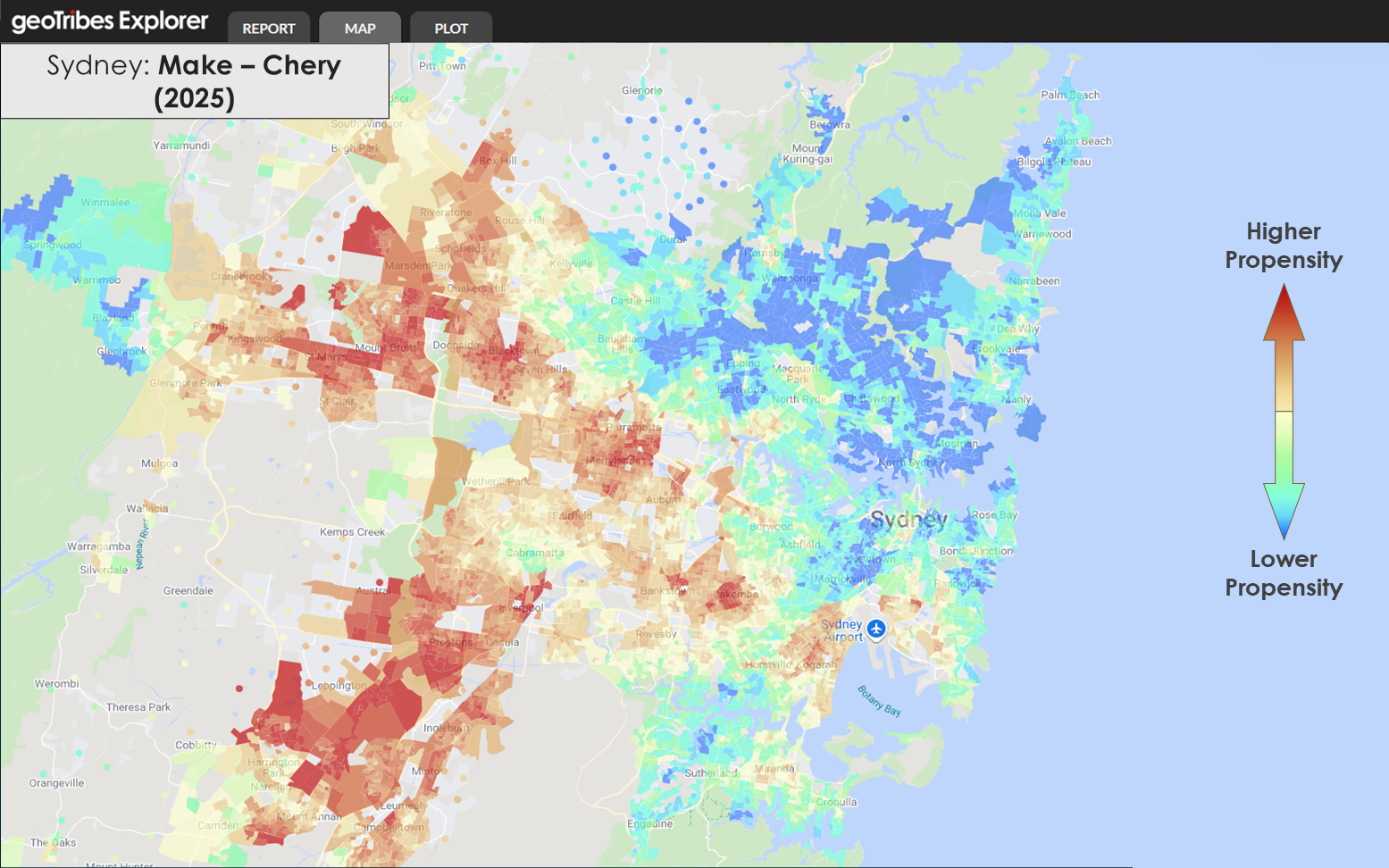
BYD is the brand that best exemplifies the rapid change in the Australian motor vehicle market. The company only entered the Australian market in September 2022, and are already outselling long-established brands such as Nissan and Subaru. They are not the only Chinese company to see great success in the Australian market, with Great Wall Motors, MG and Chery also rising in popularity. BYD’s success has so far been seen in the same areas as other electric vehicles, while the three other Chinese companies have found more success in suburban areas with lower concentrations of luxury cars.
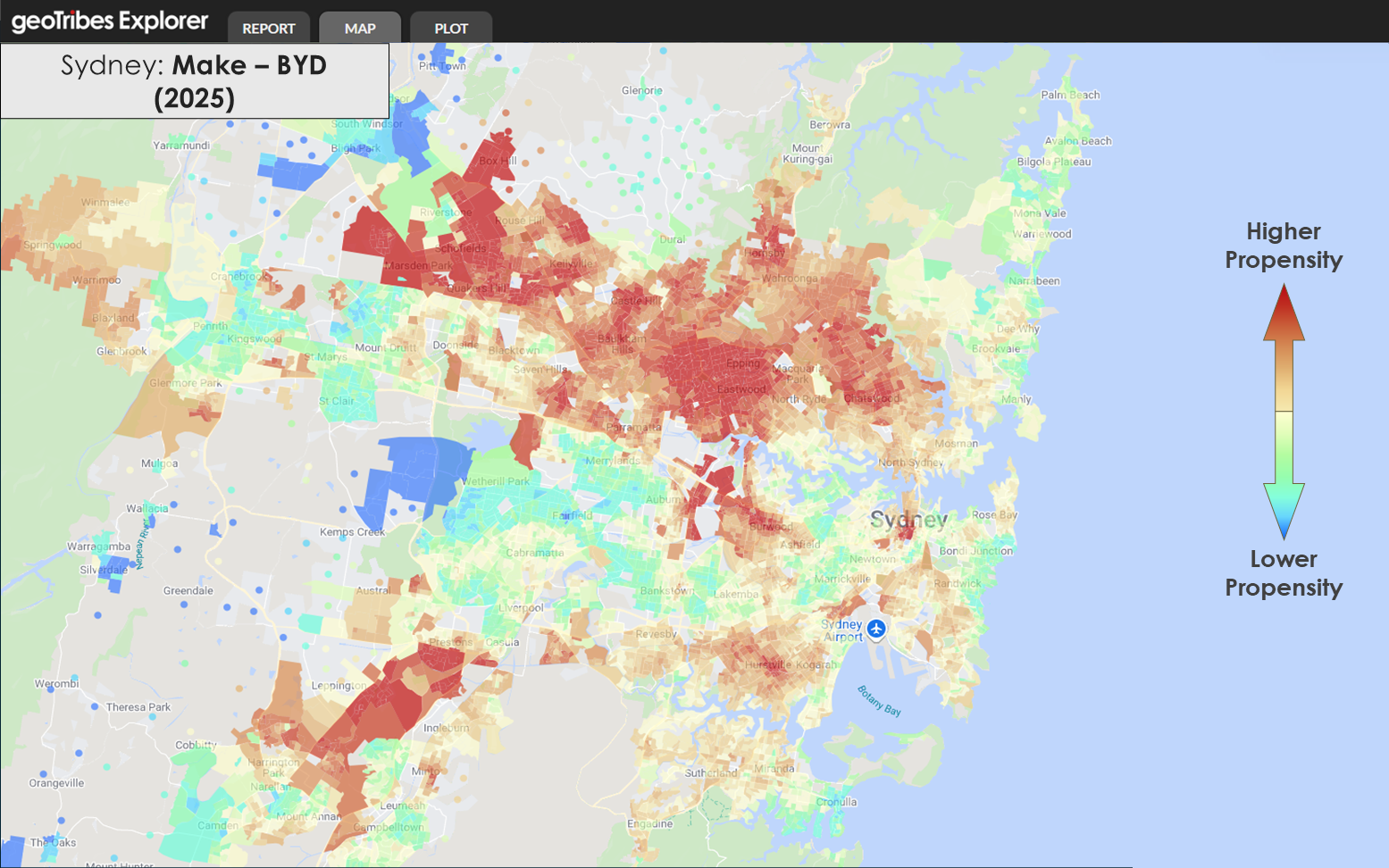 Estimated annual count of new BYD vehicles purchased in 2022-2024, per 10,000 registered vehicles as of 2024. Legend compares area values to the national mean of 8.26 per 10,000 vehicles.
Understanding SUV Growth Patterns
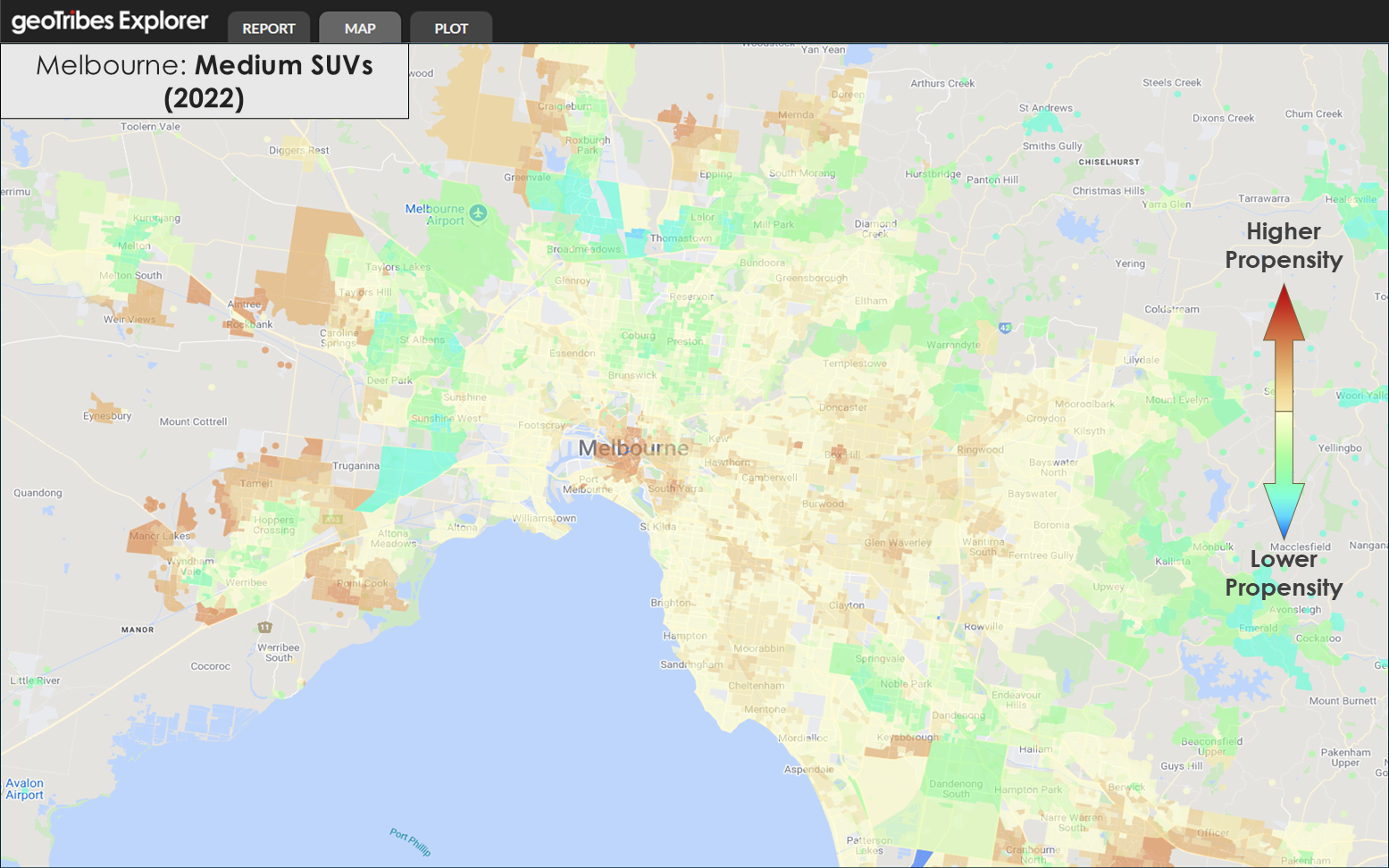
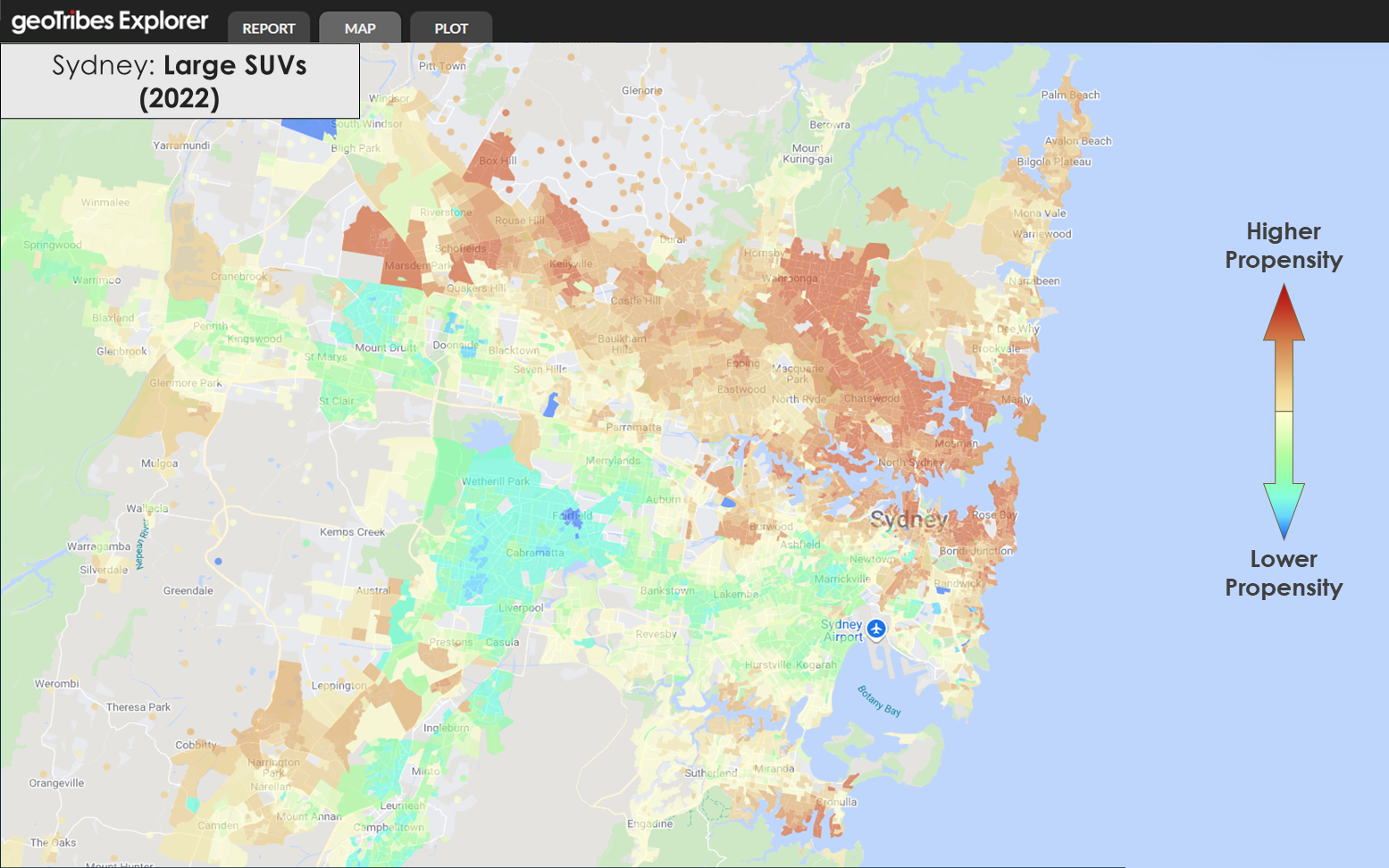
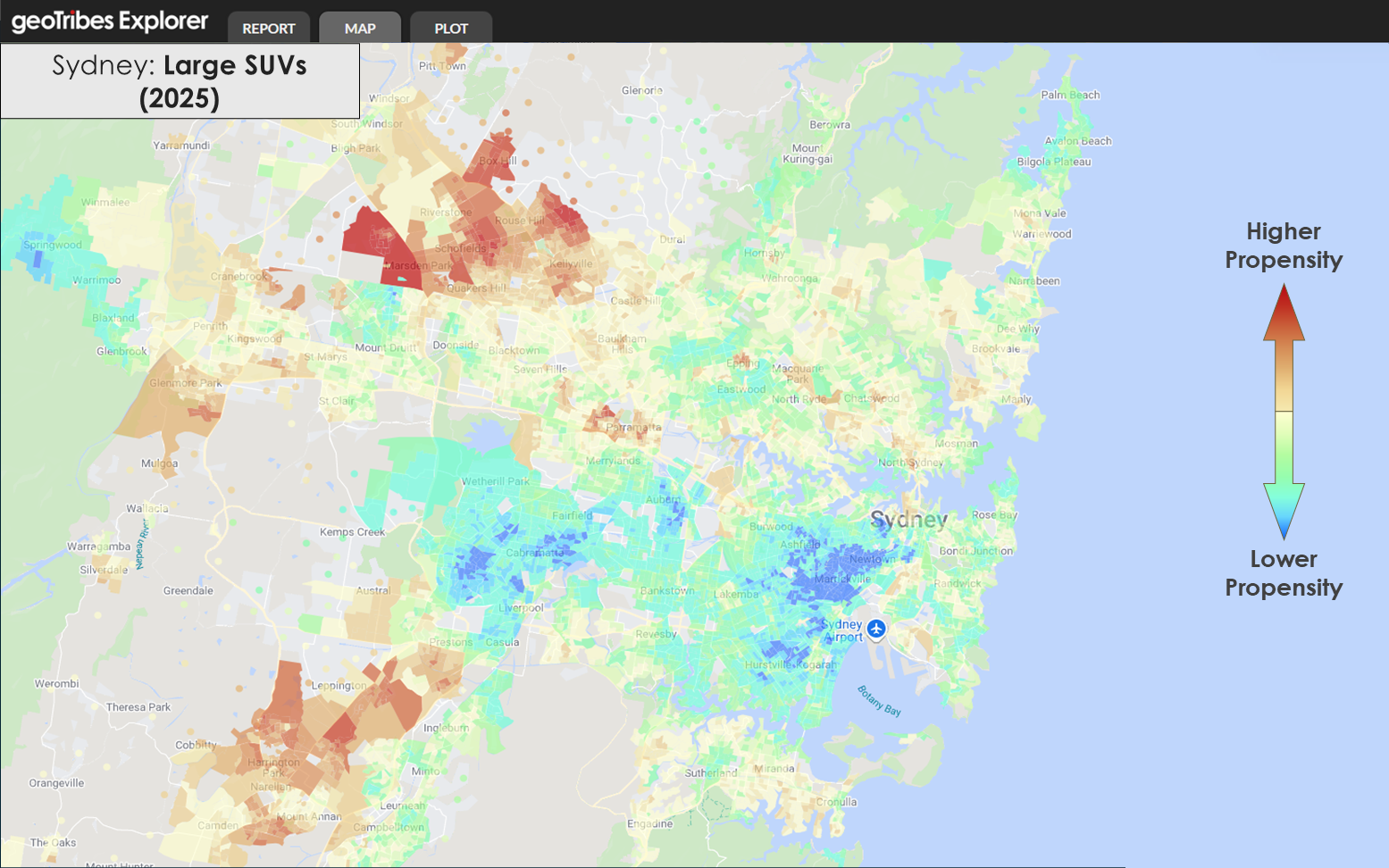
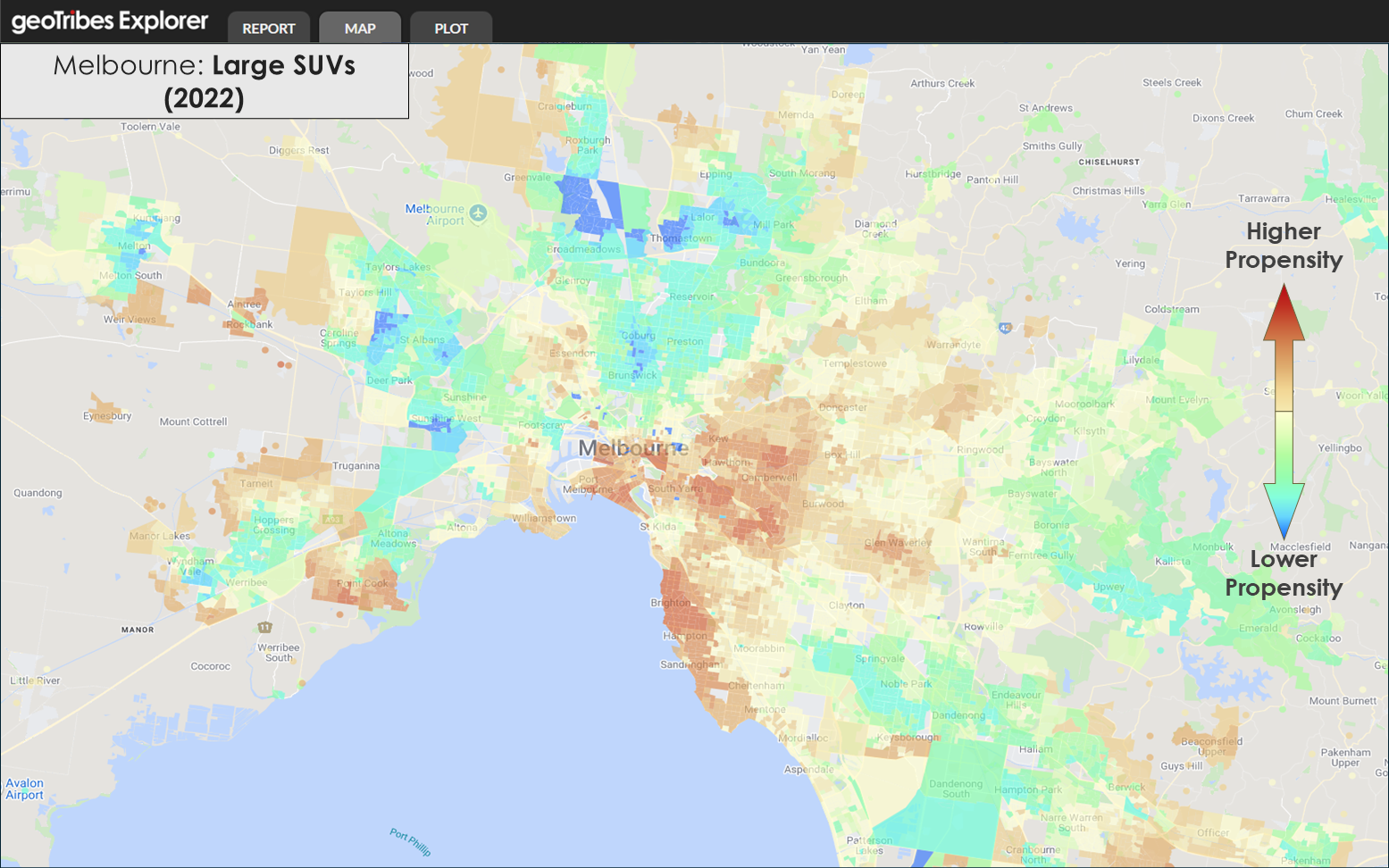
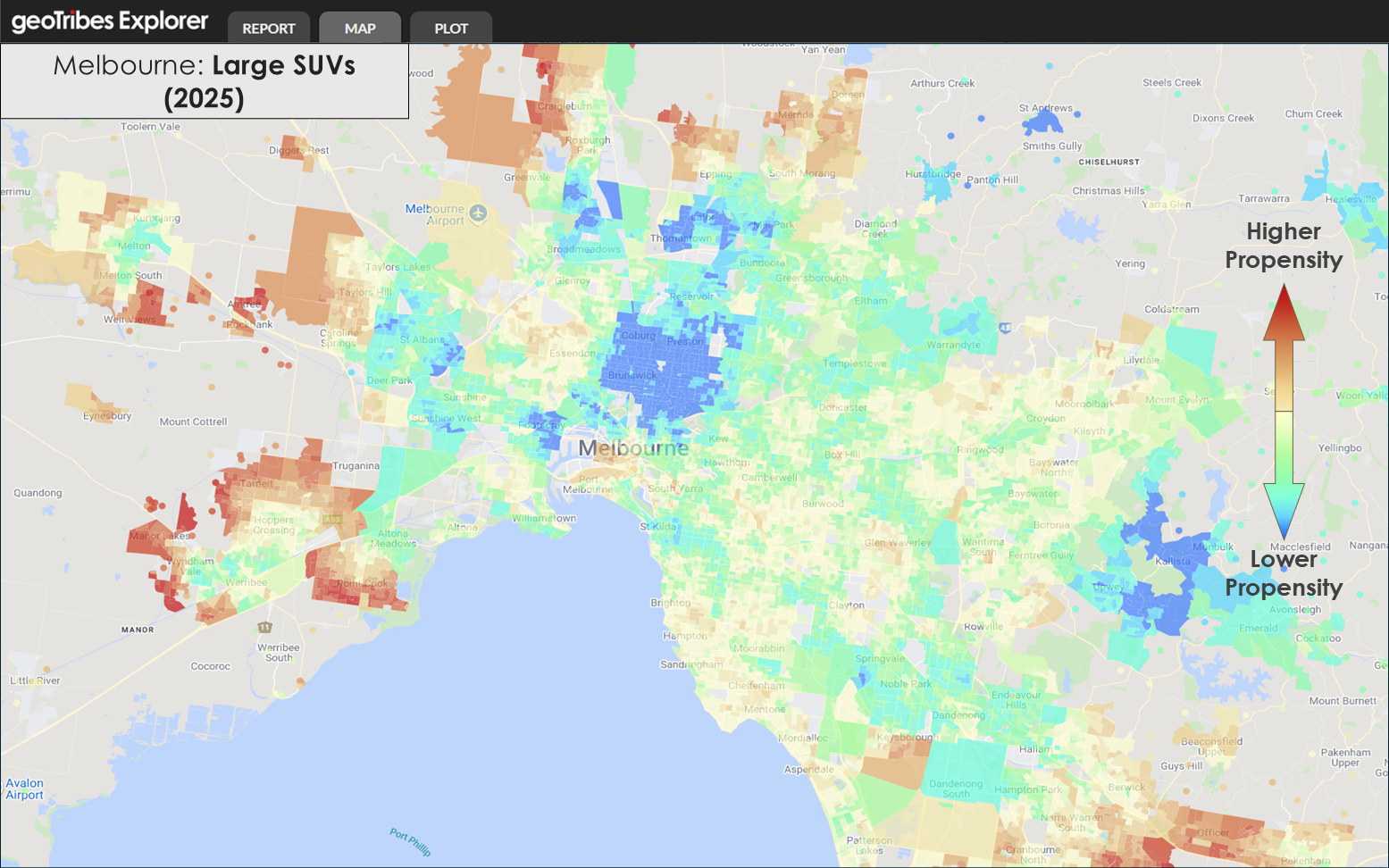
Comparing the 2022 and 2025 datasets shows that while SUVs continue to rise in popularity, their popularity has increased in some areas much more quickly than others. As with EVs, areas with young families and high dwelling growth show a particularly high propensity to purchase SUVs, likely upsizing to a car with more space.
 Estimated annual count of new medium-sized SUVs purchased in 2019-2021, per 10,000 registered vehicles as of 2021. Legend compares area values to the national mean of 87.09 per 10,000 vehicles.


Applications to Business Strategy
While this was just a quick glance at a few of the insights found in the 2025 Motor Vehicles pack data, its use supports a wide variety of use cases in the geoTribes Explorer platform, including:
Improved Audience Targeting
Target directly as geospatial audiences within OOH coverage areas or postcodes and find the locations with the highest propensity to buy a new vehicle of a particular make or model type. Often used by media agencies and OOH media owners to build better targeting strategies in response to media briefs and campaigns.
Strategic Retail Planning
Understand the types of customers that live near retail sites to better inform a retail network strategy for the future. While this data is often used by car dealerships, service stations, charging stations, and automotive retail stores, it can also be utilised for other products suited to local consumers based on their vehicle preferences (for example, outdoor gear).
Competitor Targeting
Identify battlegrounds where two automotive brands have the highest competitive intensity and understand the people who live in them to create a more nuanced view of the market. Often used by automotive manufacturers and agencies to better shape their marketing strategy.
How the Data is Structured
The 2025 Motor Vehicle data pack contains much more than just broad classes of vehicles; many vehicle makes, series and models are included.



In total, the data pack contains:
Motor Vehicle Class (7 variables), for example:
- Hatch
- SUV – large
- Ute
- Van
Motor Vehicle Type (6 variables), for example:
- Caravan
- EV
- Luxury
- Motorcycle
Motor Vehicle Makes (48 variables), for example:
- BYD
- Chery
- Ford
- Toyota
Motor Vehicle Series (16 variables), for example:
- BMW X Series
- Chery Tiggo Series
- Mazda CX Series
- Volvo XC Series
Motor Vehicle Models (113 variables), for example:
- BYD Atto 3
- Ford Everest
- Hyundai i30
- Toyota Hilux
You can see the full data dictionary for this dataset here.
If you have any questions about utilising the 2025 Motor Vehicles data in your market planning, contact the friendly RDA Technical Team on +61 2 8923 6600 or send an email to info@rdaresearch.com